
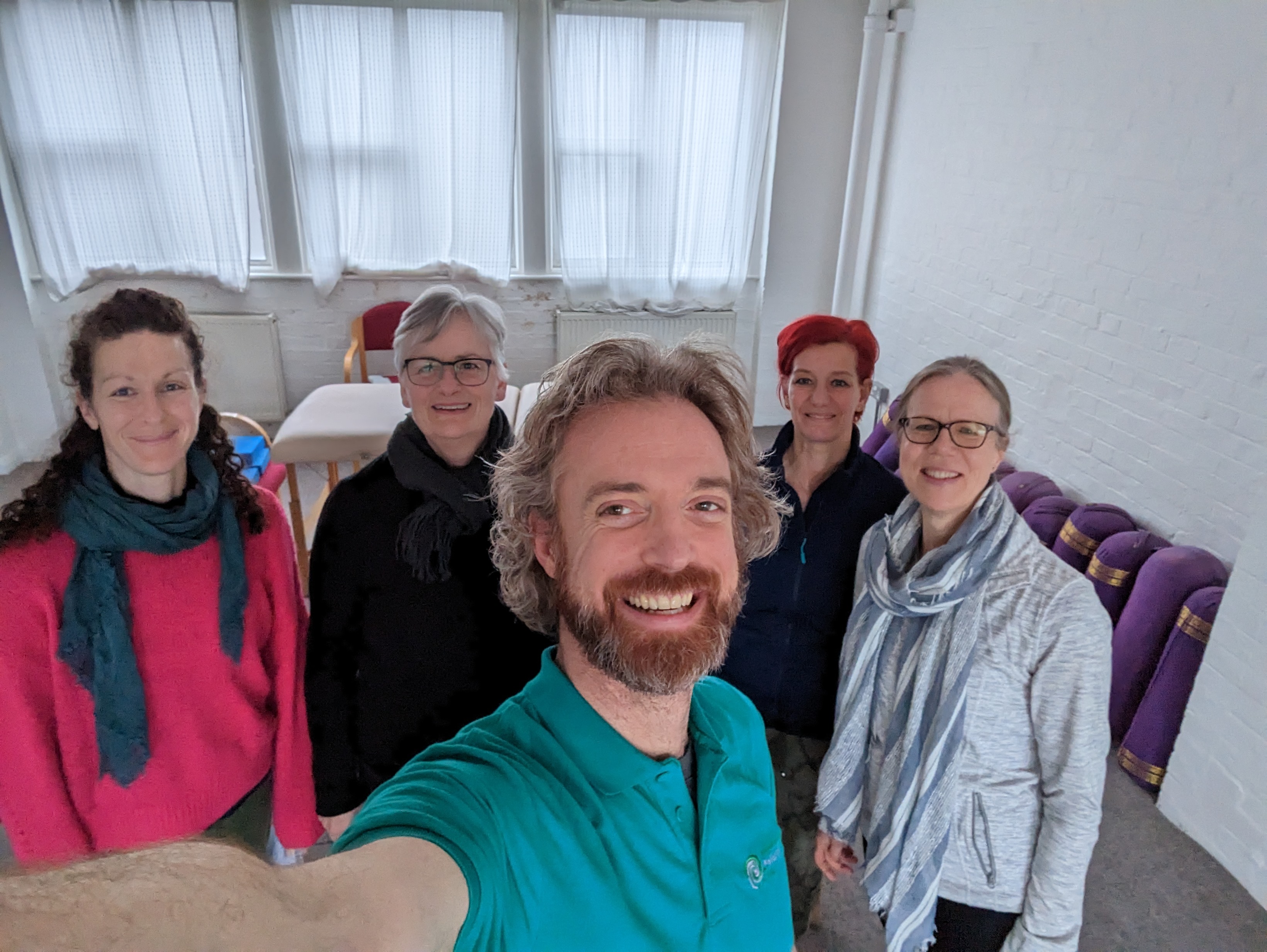
Yesterday I attended an MFR (myofascial release) Practical Skills Master Session run by tutor Tim at Myofascial Release UK in London. The object of the workshop was to work with other MFR therapists to refine skills and share tips on techniques, guided by the tutor.
I have been practicing MFR since 2017 and find it to be a highly effective whole-body approach to injury and dysfunction. Myo means muscle and fascia means band. Myofascial release describes gentle intervention to bands of fascia, the three-dimensional matrix of connective tissue which encompasses all structures throughout the body. Myofascial techniques require slow sustained pressure, allowing tissues to soften and restrictions and tensions to ease. It is a gentle yet deep, holistic approach.
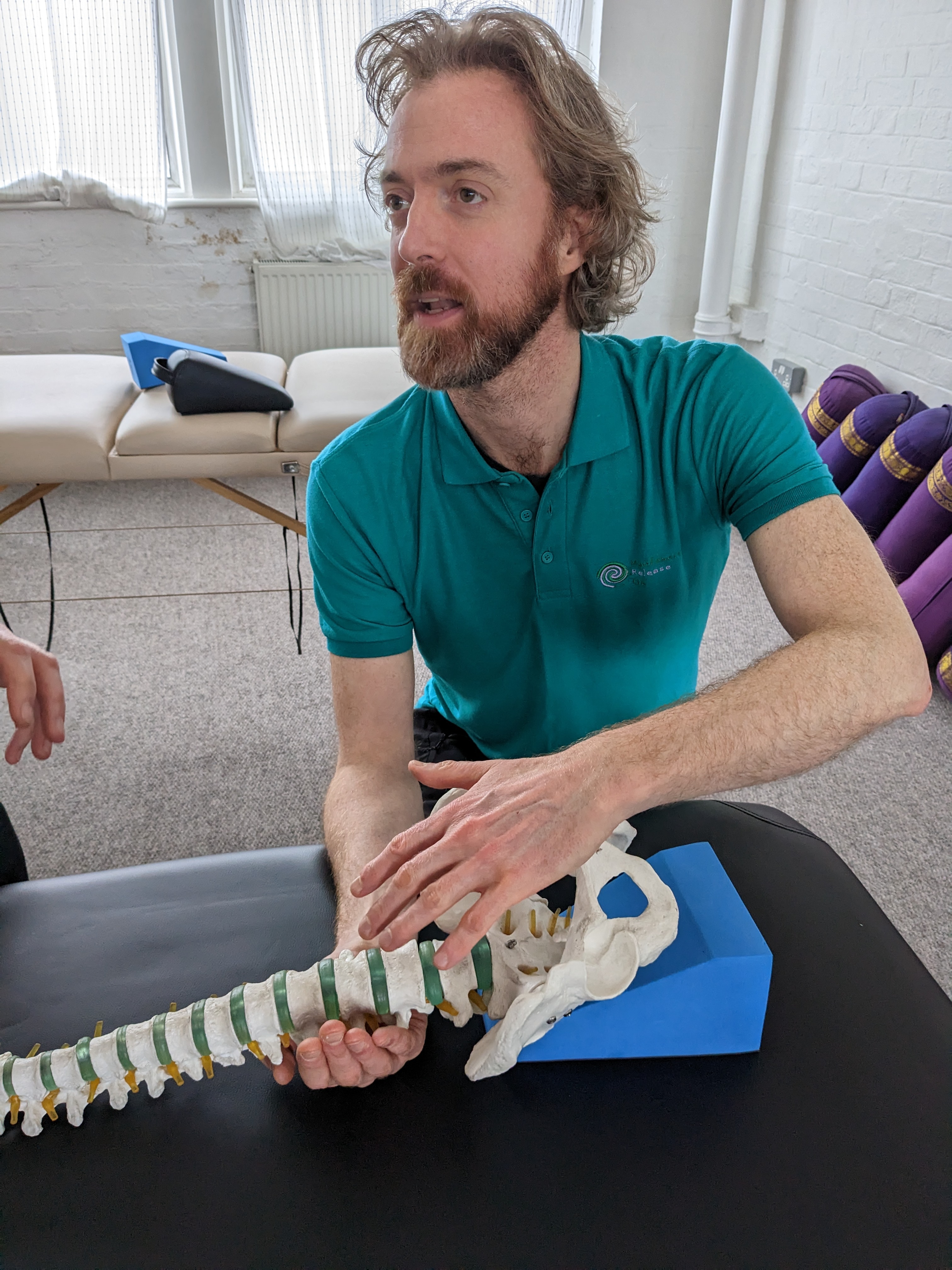
After a brief revision of spinal mechanics, we practised pelvic assessment and how to rebalance anterior or posterior pelvic tilts using blocks. Tim facilitated hands-on practice of various direct and indirect fascial techniques, some familiar to me, some new.
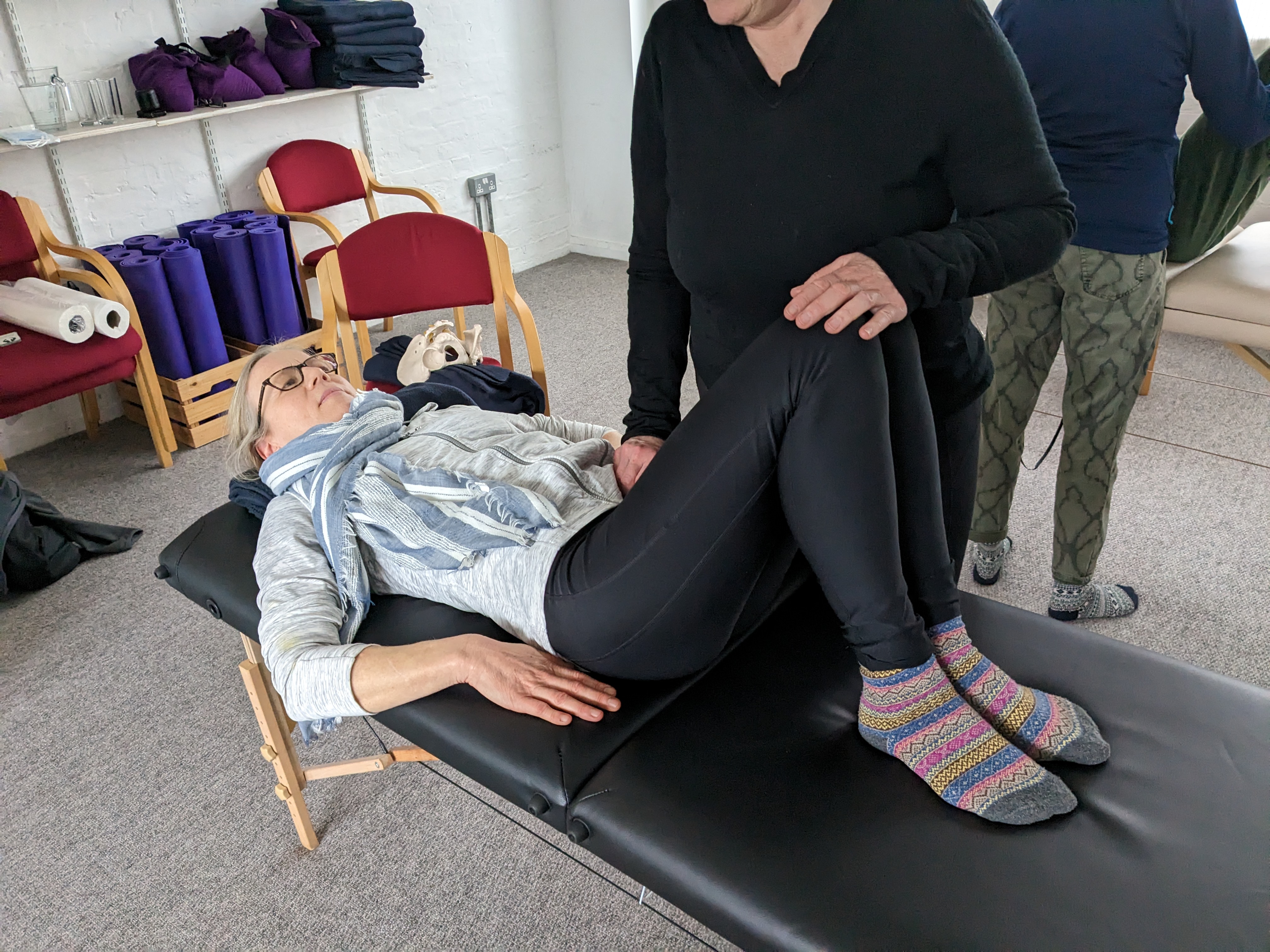
We finished off with cranial work. The sacrum and cranium are intimately linked via the central nervous system running through the spinal column. Pain or dysfunction in the lower back leads to tension in the cranium and often headaches, so the cranium and sacrum are often treated together.
It was useful to revise certain techniques and to work and swap notes with other therapists. Tim’s informal approach enabled a relaxed learning environment and I think we all benefitted from the session. It was also useful to experience myofascial treatment on the couch and to remember how it feels to be on the receiving end!
I am looking forward to my next training event in June: Fascia for Sport a two-day course which focuses on the treatment and rehabilitation of sporting injuries (or indeed those from daily life).
 Springhead Sports Massage
Leave a comment